Land Clearing vs Grubbing
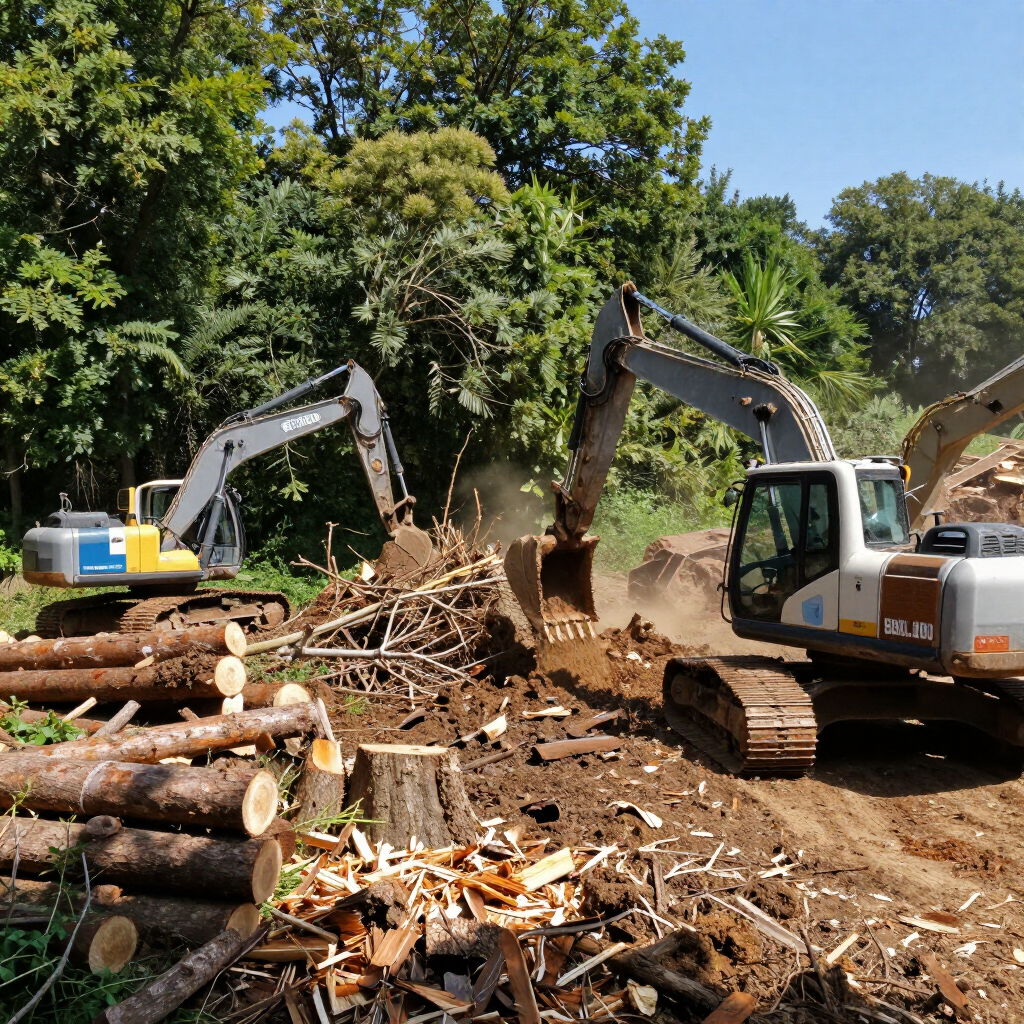
Land Clearing vs. Grubbing: What's the Difference and Which Do You Need?
If you're getting ready to build a home, add a driveway, or develop raw land in Southern Maryland, you've probably heard the terms land clearing and grubbing used interchangeably. They're related — but they're not the same thing. Understanding the difference can save you from ordering the wrong scope of work, blowing your budget, or ending up with a site that isn't properly prepared for construction.
At Scaggs Site Development, we prepare building sites across Calvert County and Southern Maryland every day. Here's a straightforward breakdown of what each service involves, when you need one versus the other, and what to expect from the process.
What Is Land Clearing?
Land clearing is the process of removing above-ground vegetation from a property. This includes trees, brush, shrubs, briars, and saplings — essentially everything growing on the surface that would obstruct grading, construction, or access. Depending on the scope, cleared material is either chipped and spread on-site, burned (where permitted), or hauled off entirely.
Clearing is typically the first step on any undeveloped or overgrown parcel. It opens up sight lines, allows equipment to move safely across the site, and prepares the surface for the work that follows.
What clearing does not do is address what's below the surface. Once the trees are down and the brush is gone, the stumps, root systems, and buried organic material are still there — and that's where grubbing comes in.
What Is Grubbing?
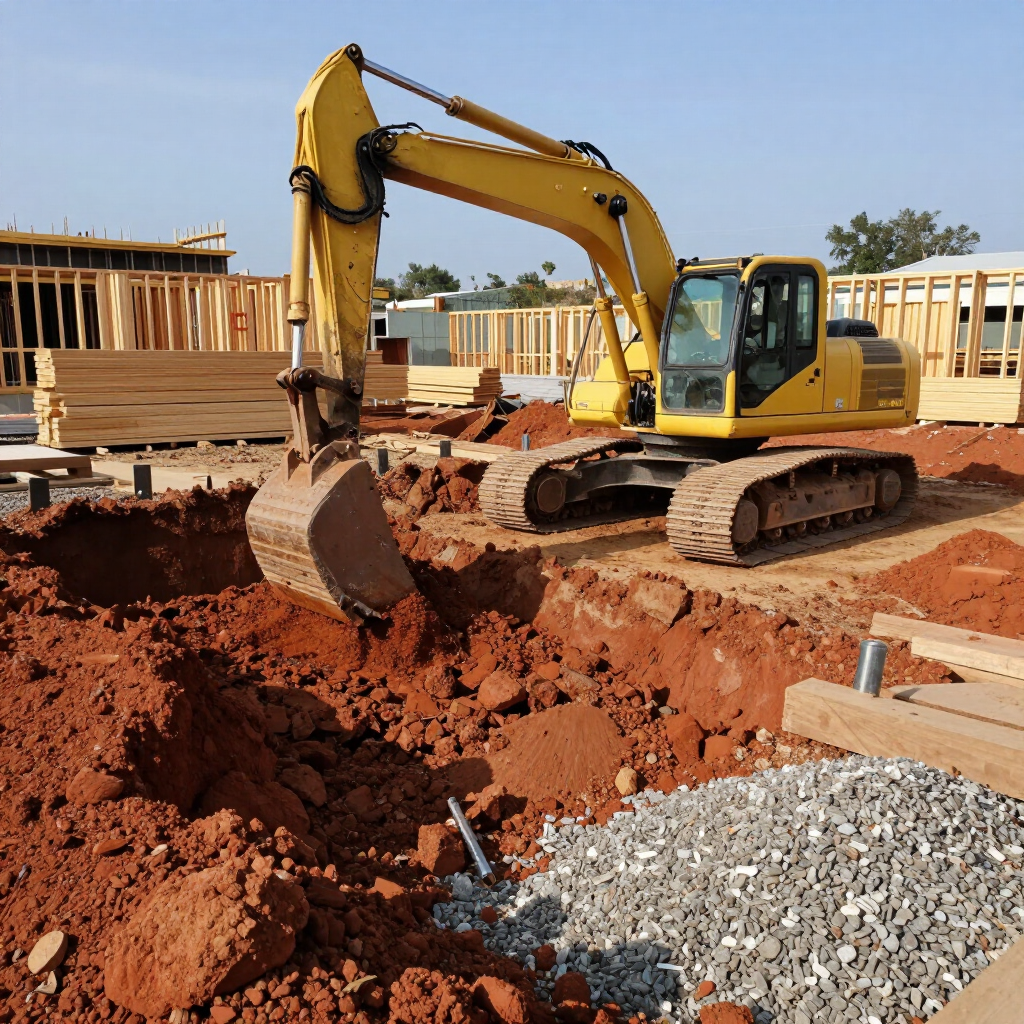
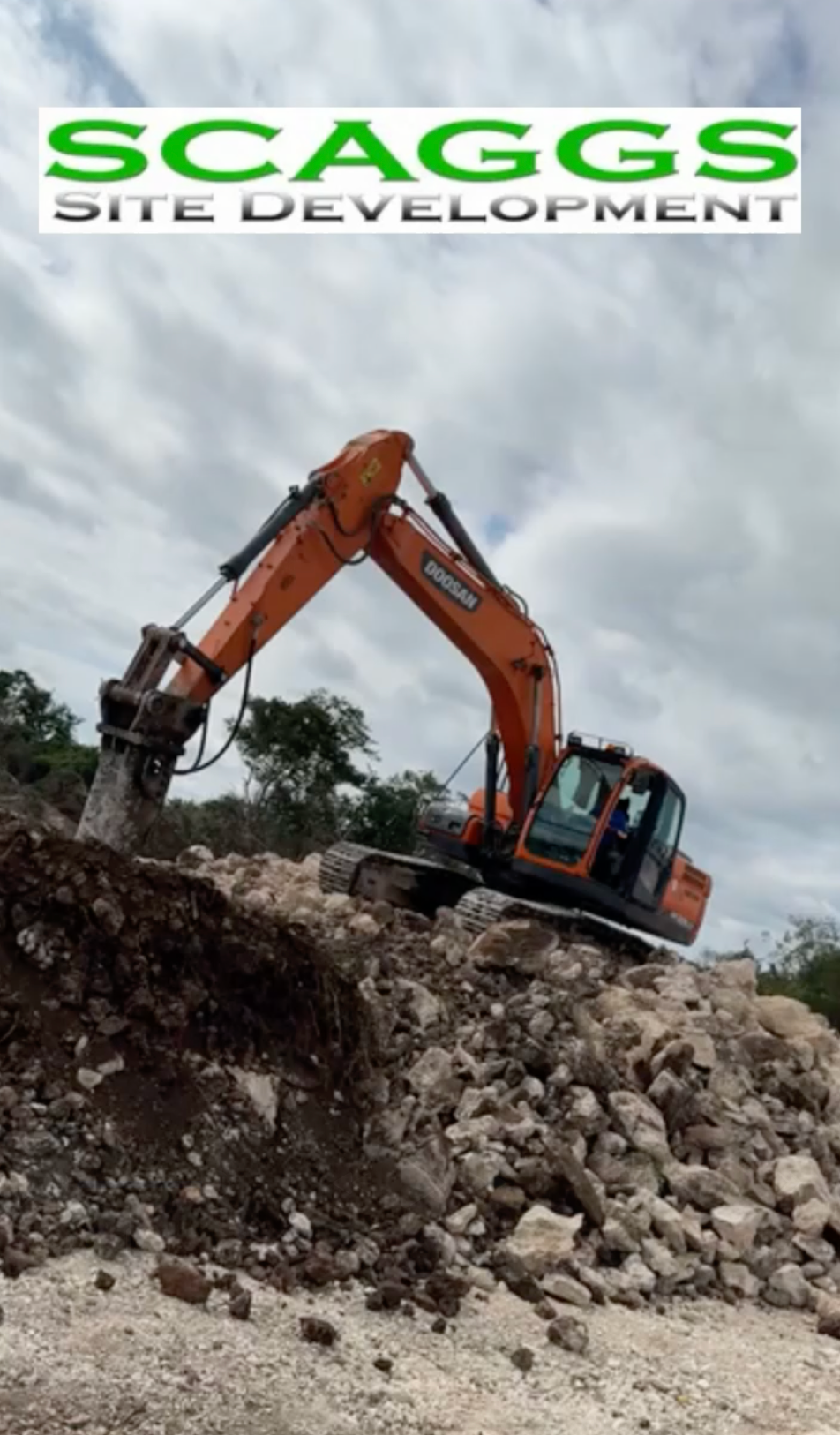
Grubbing is the removal of stumps, root masses, buried logs, and other subsurface organic material left behind after clearing. It's a more intensive process that typically involves an excavator or bulldozer working the ground to pull out root balls, grind stumps below grade, and extract any organic debris that could decompose and cause the soil to settle unevenly after construction.
Why does this matter? Organic material that's left in the ground will rot over time. As it breaks down, it creates voids and soft spots in the soil — exactly the kind of unstable conditions that cause foundations to shift, driveways to crack, and graded areas to sink. On any site where construction is planned, grubbing is not optional. It's a necessary step toward a stable, compactable subgrade.
Clearing vs. Grubbing: Side-by-Side Comparison
| Feature | Land Clearing | Grubbing |
|---|---|---|
| What it removes | Above-ground trees, brush, and vegetation | Stumps, roots, and subsurface organics |
| Equipment used | Forestry mulcher, chainsaw, skid steer, brush hog | Excavator, bulldozer, stump grinder |
| When it's done | First step on any raw or overgrown site | After clearing, before grading or construction |
| Required for construction? | Yes, in most cases | Yes, wherever structures or pavement will be built |
| Affects soil stability? | Minimally | Significantly — removes organic material that causes settlement |
Do You Always Need Both?
Not necessarily. The right scope depends on what you're building and where.
When Clearing Alone May Be Sufficient
If you're opening up a field for agricultural use, creating a firebreak, or improving access across a wooded property without any immediate construction plans, clearing alone may meet your needs. Stumps can sometimes be left in place if the ground will not be built on or paved over.
When You Need Both Clearing and Grubbing
For any project involving a building foundation, concrete slab, driveway, septic system, or graded lawn area, you need both. The grubbing process ensures that organic material is removed before compaction and construction begin. Skipping it to save money upfront almost always costs more in repairs later.
Selective Clearing and Grubbing
In some cases, you don't need to clear and grub the entire parcel — only the areas where construction, grading, or pavement will occur. A good site contractor will help you define the clearing limits based on your site plan so you're not paying to clear more than necessary while still covering everything that needs to be done.
What About Topsoil Stripping?
After clearing and grubbing, most construction sites also require topsoil stripping — the removal of the organic-rich upper layer of soil (typically the top 4 to 8 inches). Topsoil is too loose and compressible to serve as a stable subgrade. It's usually stripped and stockpiled for reuse later in finish grading and seeding, or hauled off if the site doesn't need it.
Clearing, grubbing, and topsoil stripping are often performed together as part of the initial site preparation phase before excavation and grading begin.
Land Clearing and Grubbing in Southern Maryland: What to Expect
Southern Maryland properties present a range of site conditions. Wooded lots in Calvert County often have dense hardwood canopy with deep root systems that require thorough grubbing. Low-lying areas near streams or wetlands may have restrictions on clearing activity under Maryland's forest conservation and critical area regulations. Properties along the Patuxent River corridor or near tidal waters may require environmental permits before clearing begins.
Before any clearing work starts, it's important to identify any regulated areas on the property — including wetland buffers, critical area boundaries, or forest retention requirements — so clearing limits can be set accordingly. Scaggs Site Development works within these boundaries and can help coordinate with the appropriate agencies when permits are required.
How Much Does Land Clearing and Grubbing Cost?
Cost varies based on the density of vegetation, the number and size of trees, the total acreage, site access, and what's done with the material once it's removed. Hauling stumps and root balls off-site adds cost; chipping and spreading on-site is typically more economical where space allows.
The most accurate way to get a number is to have the site walked before any work is scoped. Contact Scaggs Site Development to schedule a site visit and get a quote for your clearing and grubbing project in Southern Maryland.
Frequently Asked Questions About Land Clearing and Grubbing
What is the difference between land clearing and grubbing?
Land clearing removes above-ground vegetation — trees, brush, and shrubs. Grubbing removes what's left below the surface — stumps, root systems, and buried organic material. Both are typically needed before construction can begin on a raw or wooded site.
Do I need a permit to clear land in Calvert County?
It depends on the size of the area being cleared and its proximity to regulated features like wetlands, streams, or the Chesapeake Bay Critical Area. Projects that disturb more than 5,000 square feet typically require a grading and sediment control permit through Calvert County. Your contractor can help determine what's required for your specific site.
How long does land clearing take?
A typical residential lot can be cleared in one to three days depending on tree density, acreage, and equipment access. Larger parcels or heavily wooded sites may take longer. Grubbing is usually performed immediately after clearing as part of the same mobilization.
Can stumps just be ground down instead of grubbed out?
Stump grinding reduces a stump to wood chips at or below grade, but it leaves the root system in the ground. For areas where pavement, structures, or compacted fill will be placed, full grubbing — pulling the root ball out entirely — is the preferred method. Grinding may be acceptable in areas that will only be seeded or landscaped.
What happens to the trees and stumps after clearing?
Options include chipping and spreading on-site as mulch, burning (where local regulations permit), or hauling off to a disposal or recycling facility. Large timber may also have salvage value depending on species and condition. Your contractor will discuss disposal options as part of the project scope.
Is grubbing required before installing a septic system?
Yes. Any area where a septic drain field or tank will be installed must be cleared of root systems that could damage the system or create preferential flow paths through the soil. Your site contractor and septic installer will coordinate the clearing limits accordingly.
Planning a new build or development project in Southern Maryland? Scaggs Site Development handles land clearing, grubbing, grading, and full site preparation for residential and commercial projects throughout Calvert County and the surrounding region. Reach out today to schedule a site visit and get a project quote.
The body content of your post goes here. To edit this text, click on it and delete this default text and start typing your own or paste your own from a different source.